Dunkle Wolke
an exhibition organized by William Powhida June 3-26 Opening Reception: Friday, June 3, 6-9PM STOREFRONT 16 Wilson Avenue, Brooklyn open weekends 1-6PM (646) 361-8512 [caption id=“attachment_1472” align=“aligncenter” width=“576”]
1[/caption] From I See a Darkness, Bonny ‘Prince’ Billy well you’re my friend (it’s what you told me) and can you see (what’s inside of me) many times we’ve been out drinking and many times we’ve shared our thoughts but did you ever, ever notice the kind of thoughts I got well you know I have a love a love for everyone I know and you know I have a drive to live I won’t let go but can you see its opposition comes a-rising up sometimes that it’s dreadful and position comes blacking in my mind and that I see a darkness and that I see a darkness and that I see a darkness and that I see a darkness and did you know how much I love you is a hope that somehow you you can save me from this darkness __________ [caption id=“attachment_1473” align=“aligncenter” width=“400”]
2[/caption] The artists in Dunkle Wolke are people I consider to be friends, or at least people I’ve shared a drink and a discussion about art with. They are artists who also have some experience with darkness in all its forms from the purely formal to the emotional weight of loneliness. They talk about darkness as a condition of their environment, history, politics, a color, or personal relationships that often takes on the form of what Bjoern Meyer-Ebrecht describes as an ‘ominous shape’. For me, the ominous shape is an expression of anxiety about the production of art and a search for meaning in an often chaotic world where historical narratives break down into reality without the authority of history and moral intention. Through the process of putting reality into a narrative, we attempt give it meaning making it a contentious site to be written and unwritten giving rise to a tension between form and language. [caption id=“attachment_1474” align=“aligncenter” width=“614”]
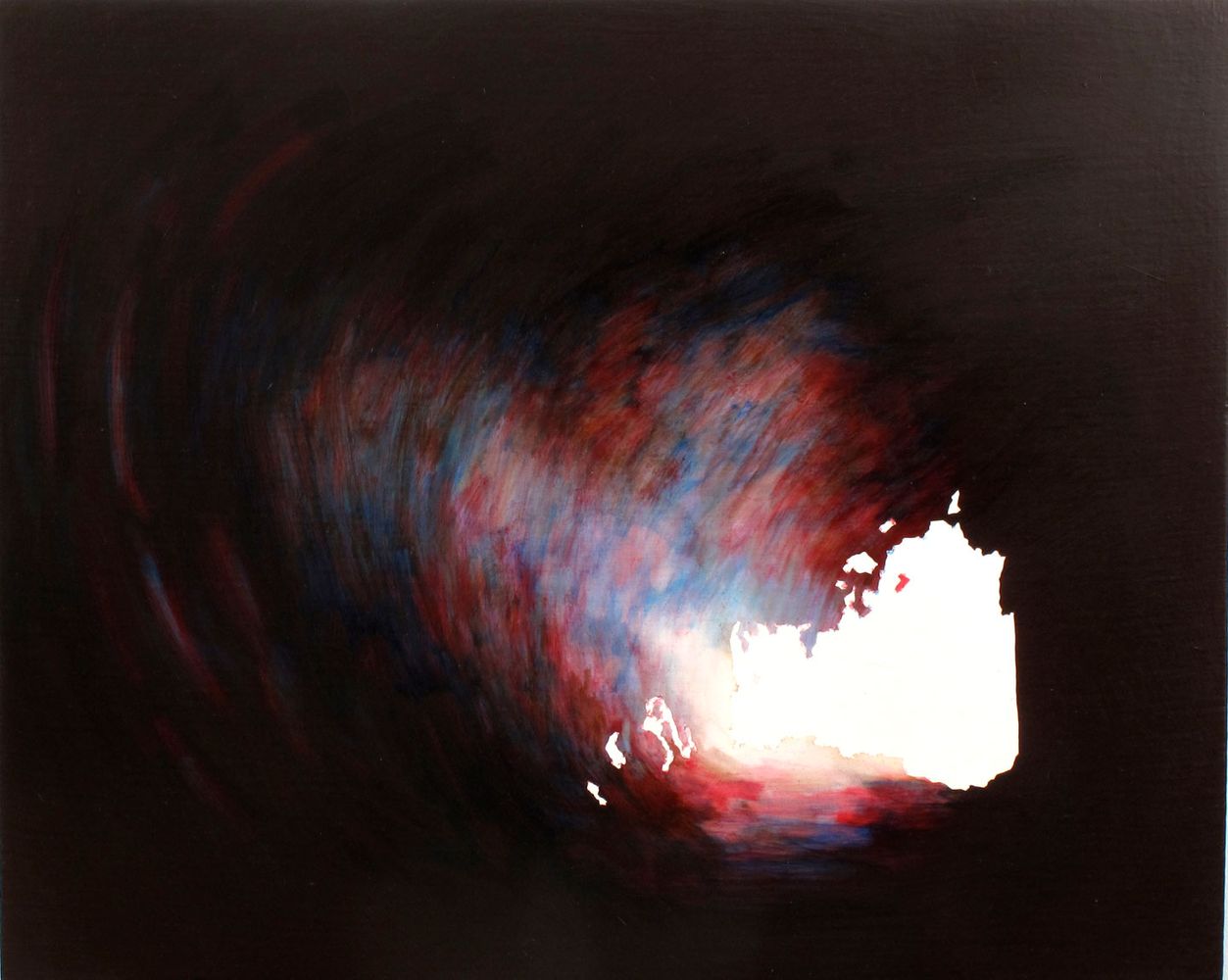
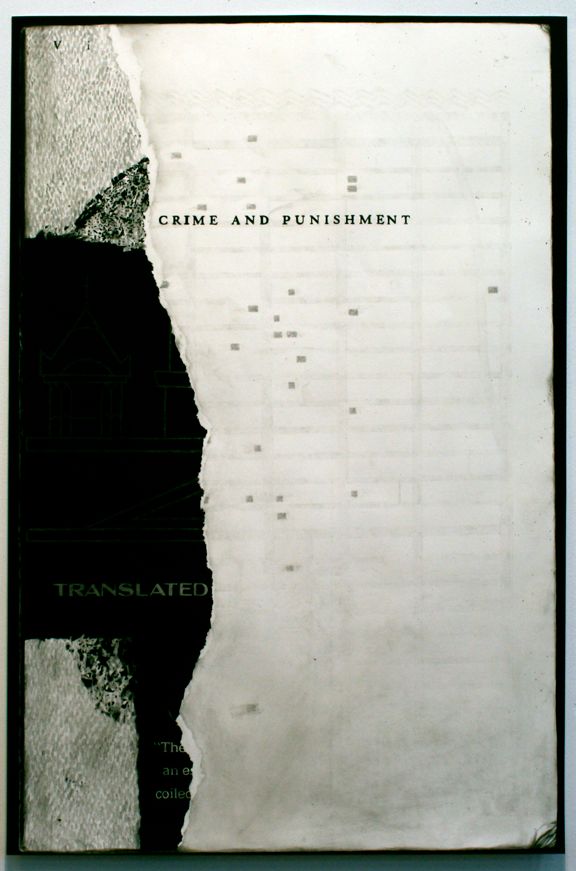
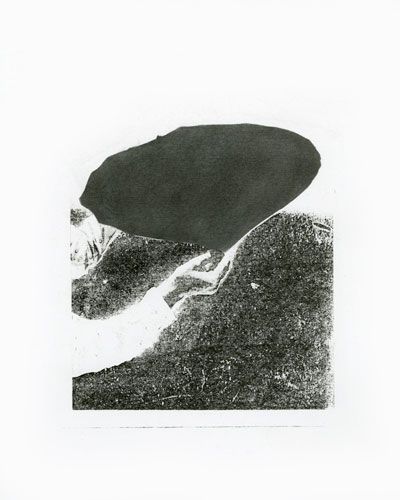
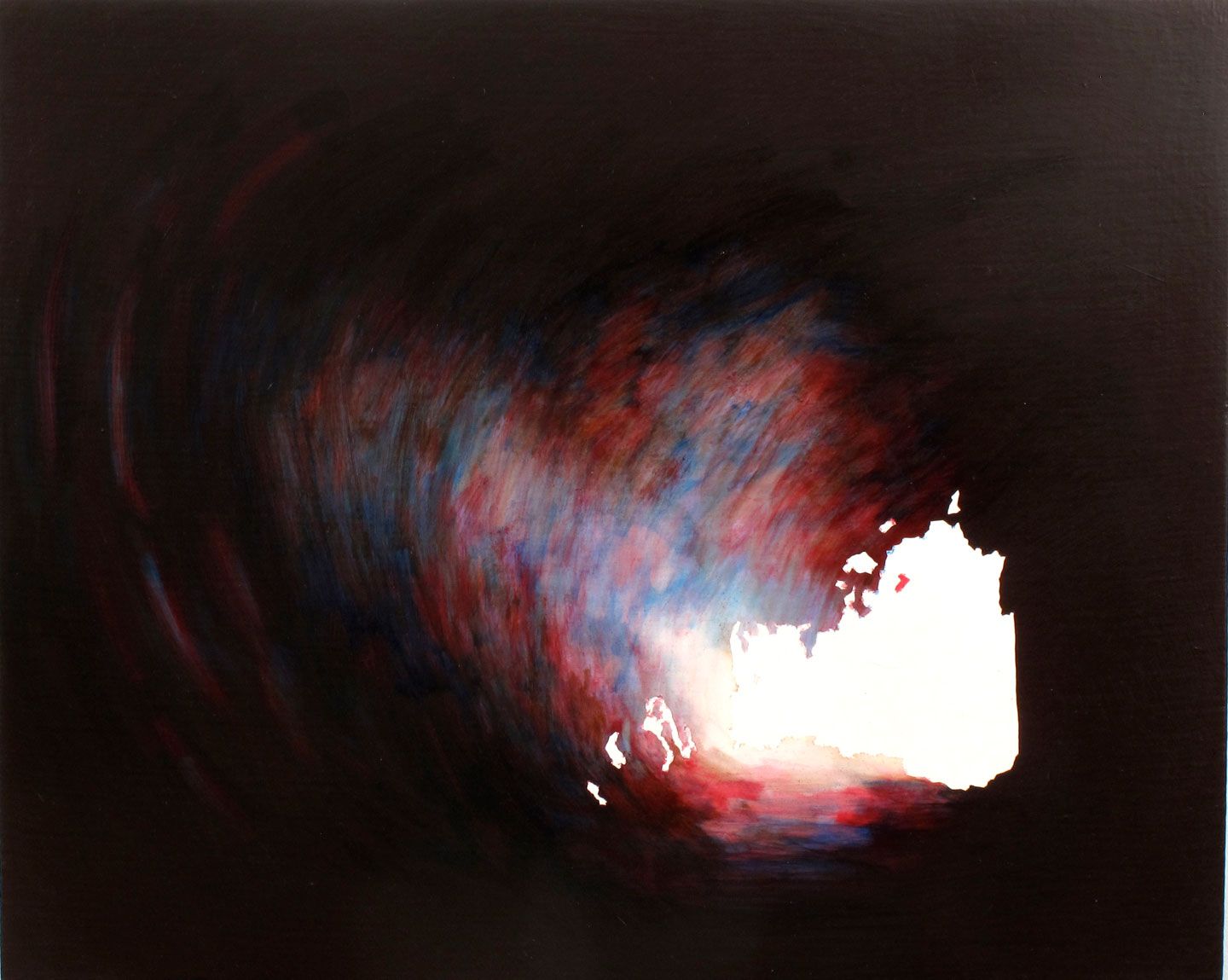
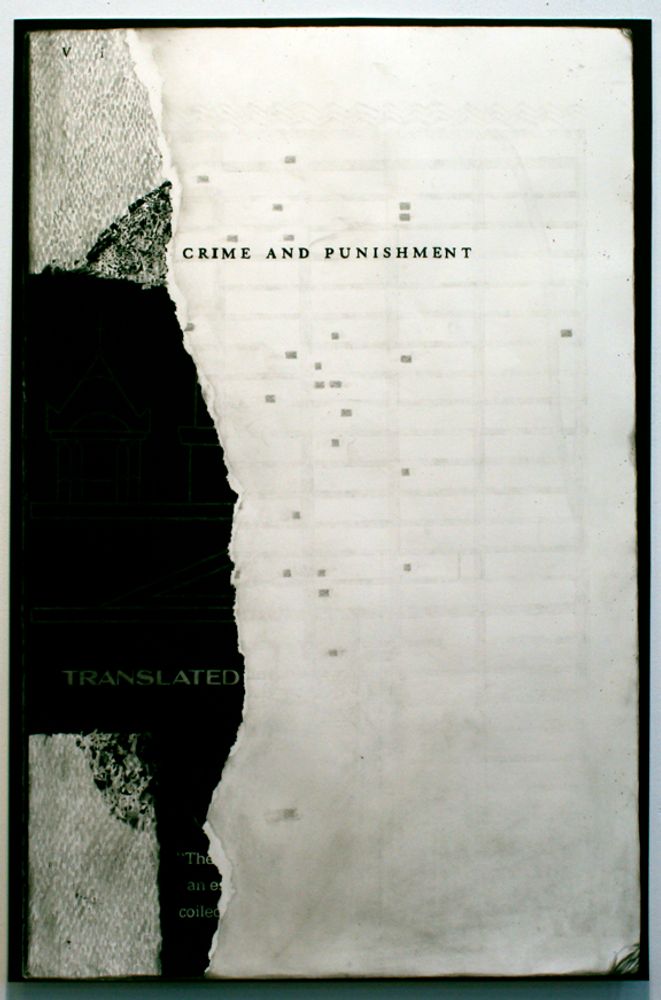
3[/caption] These tensions between reality and history, language and form are present in the works of the artists, all of whom I think about when I consider art’s relationship to the authority of history and its certainty of intention, which I do not share. Bill Abdale’s series of large-scale charcoal drawings examine the surfaces of the books he has read including Dosteyevsky’s meditation on morality “Crime and Punishment”. Through the process of reproduction, Bill traces what has been lost, scarred, and destroyed through use and interpretation. Ellie Ga’s performance, “Catalog of the Lost”, seeks to rediscover what has been presumed to be lost to history by exploring the fate of an arctic expedition. Her photographs in the show, “Fissures” are beautiful documents of her own 5 month arctic expedition, which was as much as an inward exploration as it was of the environment her ship became literally frozen in. David McBride’s dark paintings of grottos and sunsets contrast starkly with his own abstract forms, painstakingly rendered with subtle corruptions of color and registration. The tensions between the precision of his CMK process and touch create an anxious state that is mirrored in the curious relationship between representation and abstraction in his paintings. They share an uneasy co-existence that also marks Bjoern Meyer-Ebrechts sculptures and re-assembled books. The relationship between Modernist theory, represented by soft cover textbooks, and their abstract supports is uncertain, undermining the authority of both. This textual cityscape is also paired with black hard-cover books Bjoern has reshaped into angular, winged forms that imply another kind of horizon in space, echoing the tension between flatness and depth in all the artists’ pictoral space. Jenny Vogel’s video of a slowly spinning meteorite perhaps encapsulates these tensions, as the alien form threatens to invade the world, scraping against the surface of the screen. It may also be the ultimate ominous shape, a truly free-floating darkness that rises up in opposition. [caption id=“attachment_1475” align=“aligncenter” width=“614”]
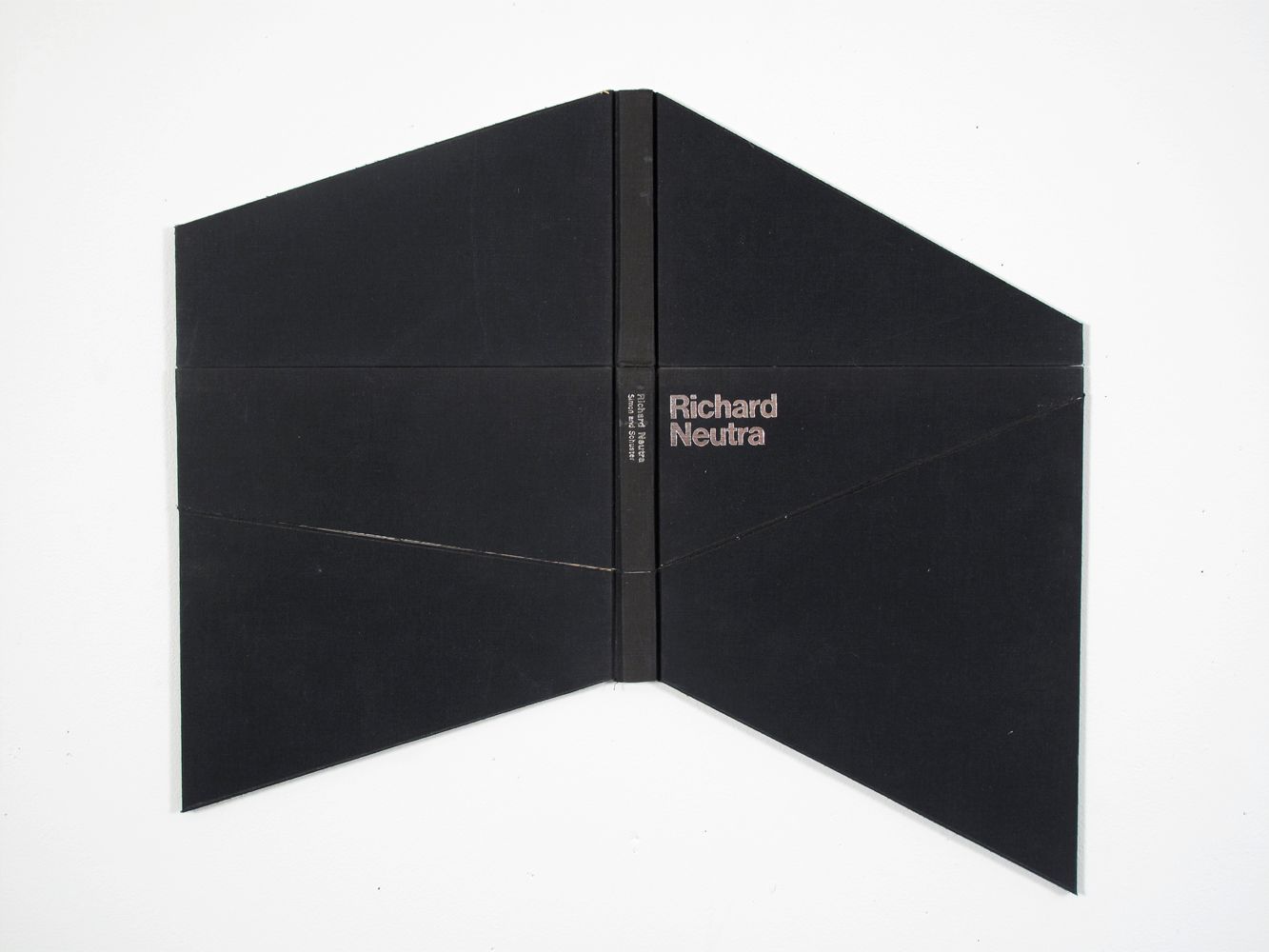
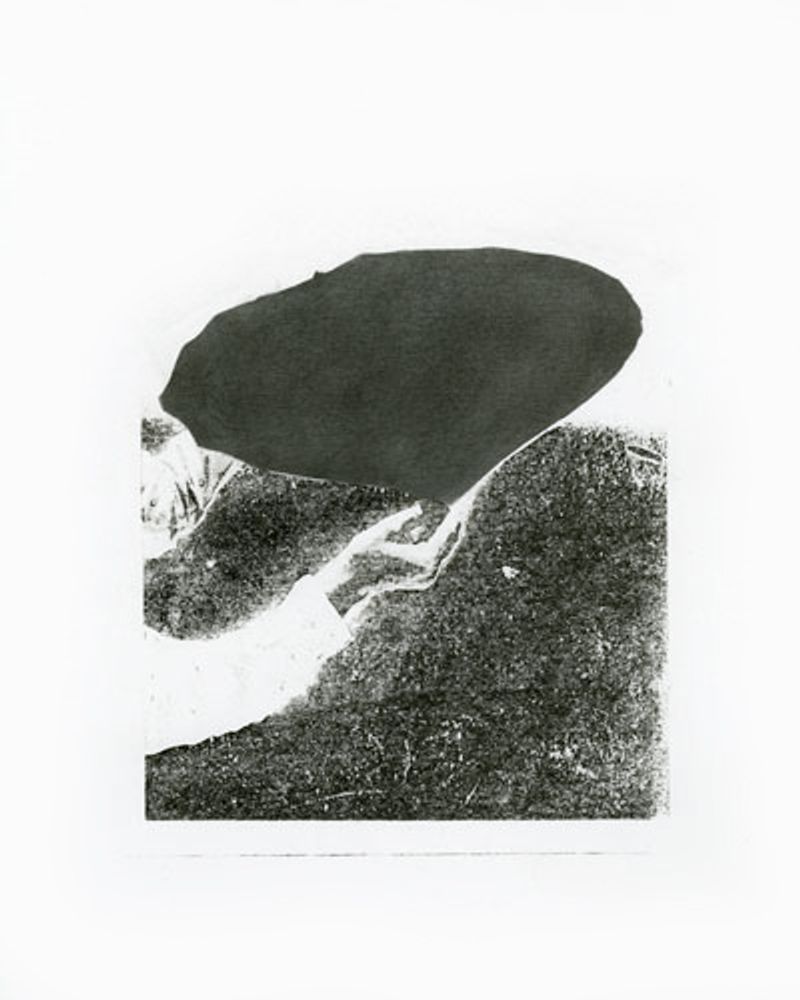
4[/caption] All of the works are equivocal representations of time, distance, and space with unfixed beginnings and end points that remain ominously close to darkness and the ambiguity of vision. They question our certainty about history, but they don’t give in to chaos. They are rescued by beauty, maybe even love without sentimentality, a love for process and possibility that art can provide some meaning and relief to the anxiety of living. Even I have to believe that sometimes. -William Powhida Images: 1. Bill Abdale, Crime & Punishment, Graphite on Paper 2. Jenny Vogel, from the series Like A Blind Man in a Dark Room, Xerox Transfer 3. David McBride, Cave Painting (Honey In the Rock) I, Oil on MDF 4. Bjoern Meyer-Ebrecht, from the series Untitled (4 Book covers - black)
[caption id=“attachment_1465” align=“aligncenter” width=“600” caption=“44 1/2” x 7’, graphite and adhesive on paper. Photo: John Michael Kohler Arts Center (www.jmkac.org)"]
[/caption] [caption id=“attachment_1466” align=“aligncenter” width=“600” caption=“Photo: John Michael Kohler Arts Center (www.jmkac.org)”]
[/caption] [caption id=“attachment_1467” align=“aligncenter” width=“600” caption=“Photo: John Michael Kohler Arts Center (www.jmkac.org)”]
[/caption] On view at the John Michael Kohler Arts Center in Sheboygan, Wisconsin as part of the exhibition, Hiding Places: Memory in the Arts
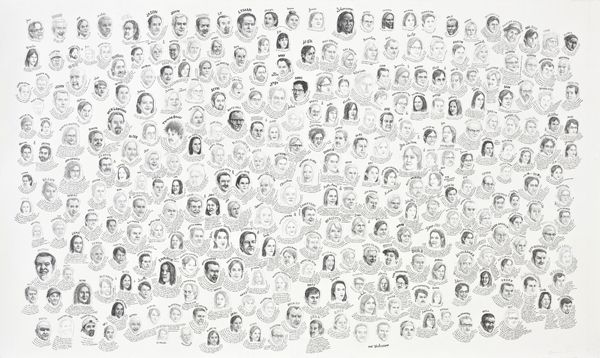
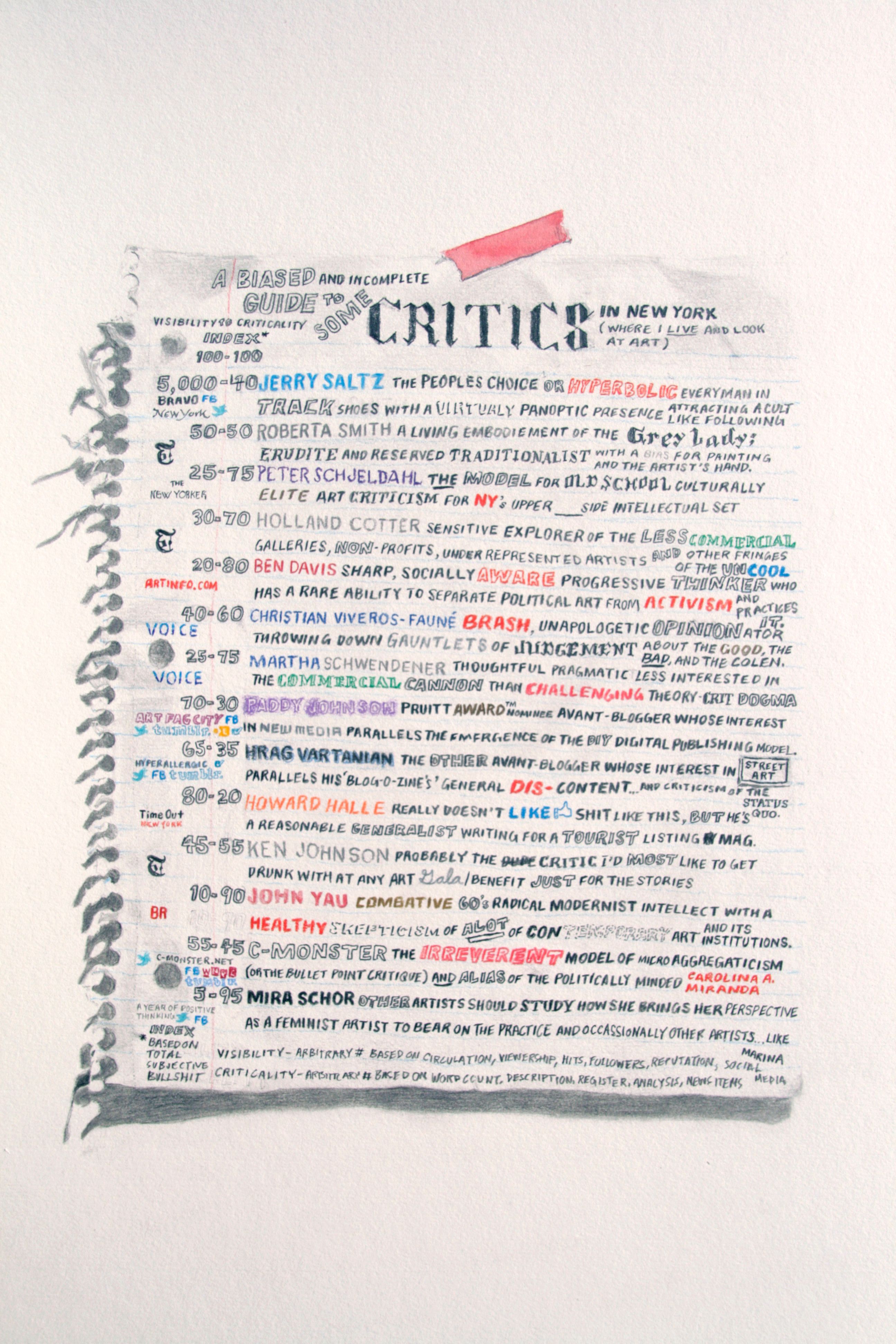
Last night I debuted this drawing about a few New York art critics I read with some regularity, though not all by choice. The drawing is available for the benefit of the Triangle Arts Association. Image:“Some Critics” Graphite on paper, 2011. Courtesy of the artist and the Triangle Arts Association Benefit
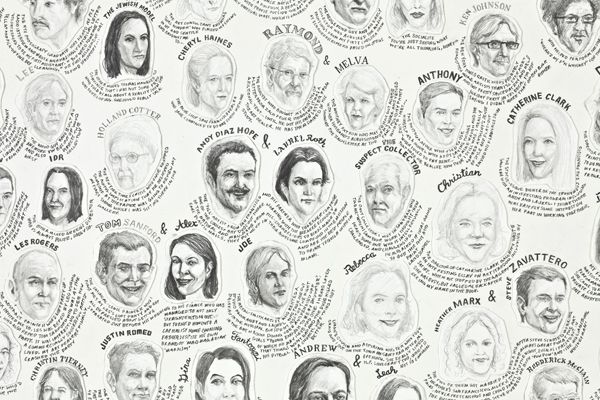
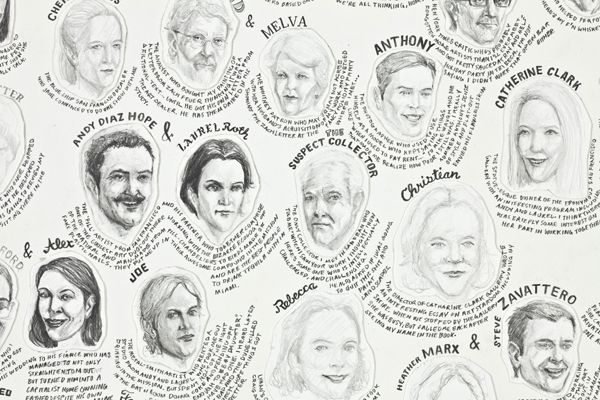
Dear Rachel Wetzler, Just a few thoughts about your critique of “I Like the Art World and the Art World Likes Me”, which I found to be excellent. It’s refreshing to encounter strong analysis. _“here is an implicit populism to the exhibition, a trumpeting of each artist’s outsider status, or at least a sense of frustration with the art world’s perceived exclusivity, but a great deal of the work hinges on the viewer’s ability to pick up on insider-only references, exacerbated by the exhibition’s lack of sufficient explanatory texts for conceptual projects.”“is likely to be unintelligible to anyone unfamiliar with the coterie depicted, raising questions about the genuine potential of this sort of work as social commentary.”_These feel like straw man arguments in so much as Minimalism remains unintelligible to anyone unfamiliar with theory and the history of Modernism. The old refrain “My kid could do that,” comes to mind. We can always find things most people don’t understand about art, and anyone who can find the Elizabeth Foundation for the Arts already knows something about the artworld. I think it’s a disservice to the audience to assume what they don’t know or that they are not capable of learning anything more about the subject if they are engaged and curious about the art work. Most art, and not just “Hooverville”, require some education and knowledge for deeper appreciation, and it is possible to learn from and about a work of art. I hope my collaboration with Jade, specifically, might provide points of entry for those with less specific knowledge of the players in the art world and the class issues that cause my own ambivalence about participating in it. I can’t believe it completely excludes people who haven’t read ArtReview’s Power 100 or been to Chelsea at some point. Even without specific knowledge of exactly who is being depicted in ‘Hooverville’, I think the casual viewer may still relate to the situations being presented from whoring oneself to popular revolt. The potential for broader social commentary is probably the easiest to identify considering the ongoing revolutions in the Middle East and the protests spreading out of Wisconsin over labor rights. (Conversely, conservatives understand whatever it is the Tea Party rallies about). These are serious issues, affecting far more people than art, which is part of the point of the drawing. As Ben Davis points out the art world is not separate from society. It is a false separation used to justify its own elitism and phenomenal prices. As for outsider status, in a star system, the vast majority of artists in society are on the ‘outside’. I think it’s one of the implicit subjects of the show, but the term ‘outsider’ conflates a number of issues from academic training, geography, to an artist’s individual track record. During the panel discussion, neither Jen Dalton, Loren Monk, or myself claimed to be outsiders, and if we are, it’s not by choice. “The “established art world” is treated as a fixed entity towards which an attack might be levied, allowing Doeringer and many of his chosen artists to avoid actually offering an exploration of what it constitutes.” The established art world includes ‘established’, ‘mid-career’, and ’emerging’ artists, art fairs, commercial galleries, museums, non-profit art centers, widely-read critics, theorists, academia, and publications to name a few aspects. I think most of these are addressed throughout the show in some manner, although academia seemed to get off the hook. Michael Waugh’s CAA thesis abstract mash-ups would have been an excellent inclusion. He randomly edited over fifty of them together and they still sounded perfectly plausible. In the catalog, Doeringer classified the artists by their dominant mode of practice; Appropriators, Documentarians, and Critics. I don’t think Doeringer intended the show to only be about critique, but to also include those artists using it as material. It seems your primary criticism of the show is built on an assumption that it only about institutional critique, not subject or source material for an artist’s practice. That is no more solipsistic than Modernist painters making art about its own formal limitations. “The exhibition offers a compelling, if chaotic, look at artists’ own insights into the world they occupy and what it means to be an artist today, but fails to cohere into a convincing critical statement–or to present an idea of what a better art world might truly look like.” I’d turn that last statement back on you, Rachel. What do you think a better art world might truly look like? Jen and I asked ourselves that question after Miami in 2009, and we developed a problem statement for #class. We then spent a month along with a few hundred people discussing it, but I feel #class only achieved the first half of your final sentence. I was allowed to peer into the chaotic art worlds many people occupy and learned perhaps more than I’d liked of what it meant for them to be artists, unknowns, mothers, uninsureds, art handlers, dealers, collectors, critics, friends, enemies… What I ultimately learned from #class is that people can’t even articulate what the problem or problems are, let alone agree on them in order to even think about what the solutions might be despite the clarity of Jen Dalton’s work, many other feminist artists, and the entire school of institutional critique. I am also paraphrasing an economist I heard on WBAI a few weeks ago who was talking about how the general public can’t begin to grasp the magnitude of the mortgage crisis, the bailouts, or the fact that 80% of the population control only 15% of the country’s net worth. These are also problems that require complex answers, that most people do not have the specialized knowledge to address, yet continue to adversely affect the majority of our country. This requires that people educate themselves, which is unfortunately, a lot of work. Thankfully, we have books like “Griftopia” and films like “Inside Job” to help make that easier (I’m being serious). I don’t think it Eric’s responsibility to produce solutions anymore than the individual artists. Some are responding emotionally or intuitively, while Jen Dalton tackles it analytically allowing the data to speak for itself, which is damning enough. She doesn’t even need to editorialize the results. The viewer just needs to take it in and the conclusions justify her inquiry into questions that “put a bee in her bonnet”. She poses no solutions herself, leaving that responsibility to the viewer. While the results of her inquiry into gender inequality, which you confirmed via another study, clearly shows a problem we have been well-aware of it persists despite the opening of the Elizabeth A. Sackler Center for feminist art at the Brooklyn Museum. This persistence of class, gender, racial, and economic disparities are visible in all aspects of society, not just the field of art. Left with this dismal analysis, one _might want to do something about i_t. I make drawings, that’s how I feel useful when I’m not teaching. What the show makes clear after you have assessed the data and identified some problems, we are left still looking for ways to prompt action through provocation, debate, discussion in hopes that enough people might arrive at some tentative agreement to work towards solutions. This is why I think the show may leave you less than satisfied, because while the problems may seem self-evident, the established art world carries on if they aren’t. Most of its stars are busy cozying up with fashion houses, selling expensive trophies, or hosting the Oscars. Fuck them. Best, William Powhida
[caption id=“attachment_1437” align=“aligncenter” width=“1024” caption=“Installation shot”]
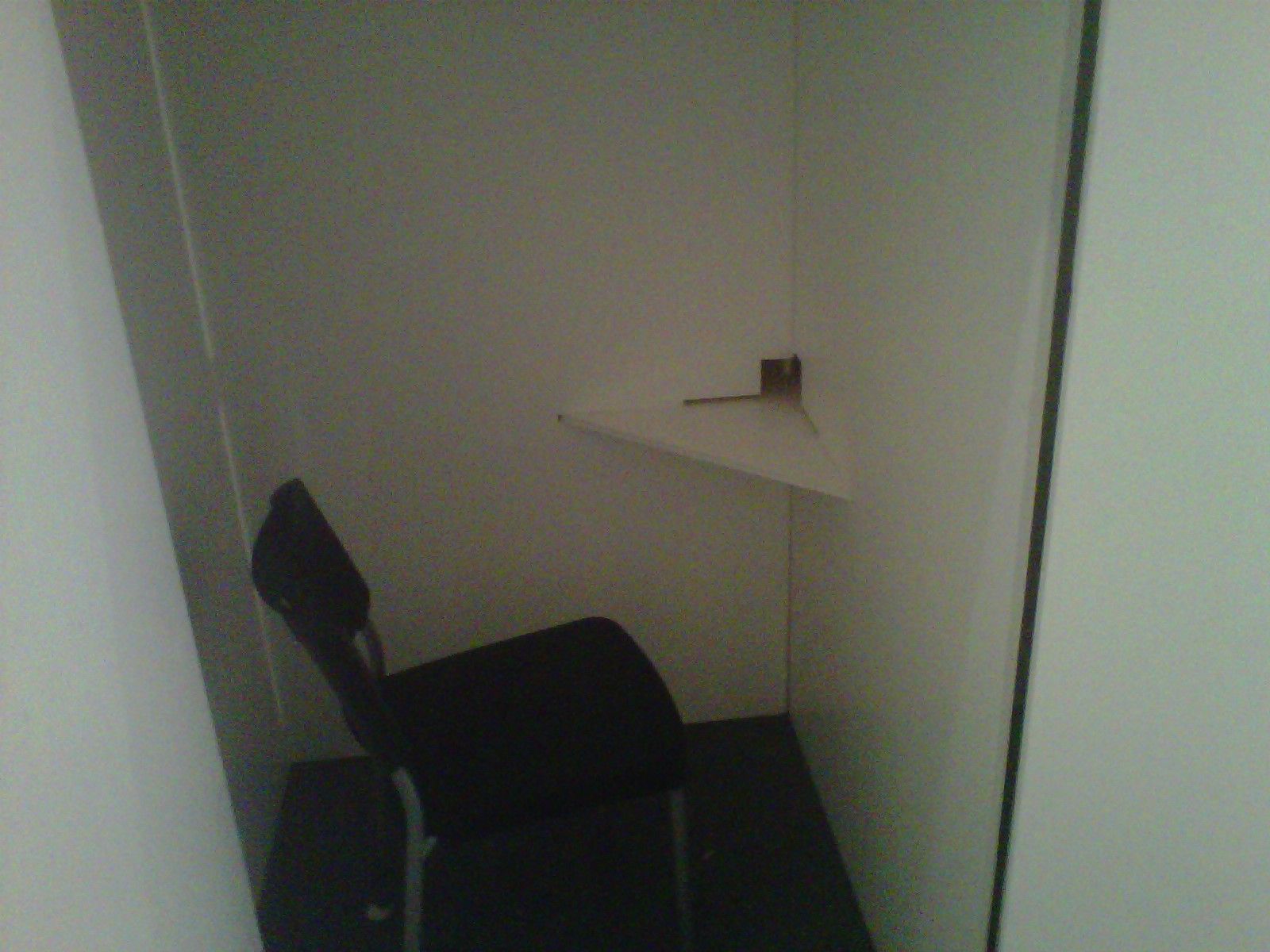
[/caption] From 2-5pm this coming Sunday, March 6, please come visit the Failure Desk, a new collaboration between William Powhida and Jen Dalton. The artists will be gathering public thoughts on failure through short, semi-anonymous discussions. Conversations will be recorded and transcribed anonymously. Participants will be compensated. The Failure Desk at Lu Magnus Gallery 55 Hester Street on the Lower East Side New York, NY 10002 http://www.lumagnus.com/events.html So, just show up and take a number. Our assistant will be with you shortly.